



Blog

  • South Korea Declares Heatwave a National Disaster—A Sign That Climate Emergencies Are Redefining National Security

    South Korea’s decision to officially classify its ongoing heatwave as a national disaster signals more than an emergency response to soaring temperatures. It reflects a growing global realization that extreme heat is no longer simply a seasonal weather event—it has become a major public health crisis, an economic challenge, and a national security concern.

    As temperatures climbed to unprecedented levels and the number of heat-related deaths reached 19, President Lee Jae Myung instructed government agencies to strengthen emergency measures, expand support for vulnerable communities, and treat the crisis with the same urgency traditionally reserved for floods, typhoons, and wildfires. According to officials, thousands of people have also suffered heat-related illnesses since the beginning of the summer season.

    The declaration highlights an important shift in disaster management. Governments are increasingly recognizing that climate change is creating emergencies that unfold gradually but can cause damage comparable to sudden natural disasters.

    Heat Is Becoming One of the World’s Deadliest Natural Hazards

    Unlike earthquakes or hurricanes, heatwaves rarely produce dramatic images of destruction.

    There are no collapsed buildings or flooded streets immediately visible on television. Instead, the danger builds quietly through dehydration, heatstroke, cardiovascular stress, and respiratory complications, particularly among older adults, outdoor workers, children, and people with existing medical conditions.

    Public health experts increasingly warn that prolonged extreme heat now causes more weather-related deaths in many countries than storms or floods, making it one of the most underestimated climate threats of the modern era.

    Record Temperatures Changed the National Conversation

    South Korea recently recorded its highest temperature since official weather observations began, with temperatures reaching 42.5°C in parts of the country.

    The record has intensified concerns that climate extremes once considered exceptionally rare are becoming increasingly frequent across East Asia.

    Meteorologists attribute the immediate conditions to persistent high-pressure systems trapping hot air over the Korean Peninsula, while climate scientists note that rising global temperatures are increasing both the frequency and intensity of extreme heat events.

    For policymakers, the new record served as evidence that existing emergency planning must adapt to a changing climate.

    President Lee Wants Long-Term Climate Preparedness

    Rather than limiting the response to immediate relief, President Lee directed ministries to strengthen long-term disaster planning.

    Government agencies have been instructed to expand protection for elderly citizens, outdoor workers, and other vulnerable groups while ensuring that hospitals, emergency services, and electricity networks remain capable of operating during prolonged periods of extreme heat.

    Officials have also emphasized improving cooling centers, increasing public awareness campaigns, and coordinating local governments to provide faster assistance where temperatures remain dangerously high.

    The approach reflects a broader shift from reacting to disasters toward preparing for recurring climate emergencies.

    Cities Are Feeling the Greatest Pressure

    Urban environments are particularly vulnerable during heatwaves.

    Concrete buildings, asphalt roads, and dense infrastructure absorb and retain heat throughout the day, creating what scientists call the urban heat island effect. Even after sunset, temperatures in cities often remain significantly higher than in surrounding rural areas.

    To reduce health risks, local governments have expanded air-conditioned public shelters, increased welfare visits to elderly residents, and encouraged employers to modify outdoor working hours during periods of extreme heat.

    Urban planning is therefore becoming an increasingly important part of climate adaptation.

    The Power Grid Faces Growing Demand

    Extreme temperatures affect more than human health.

    As millions of households and businesses rely on air conditioning simultaneously, electricity demand rises sharply. Governments must ensure that power plants, transmission networks, and emergency backup systems continue functioning despite record consumption.

    President Lee has instructed authorities to inspect critical infrastructure and strengthen preparedness against possible disruptions, recognizing that reliable electricity has become an essential component of public safety during heat emergencies.

    Climate Change Is Becoming a Public Health Challenge

    The current crisis demonstrates that climate policy and healthcare are becoming increasingly interconnected.

    Doctors warn that prolonged exposure to extreme heat can worsen chronic illnesses, reduce workplace productivity, increase hospital admissions, and place additional pressure on healthcare systems already managing seasonal diseases.

    Mental health also becomes an important concern, as prolonged periods of extreme weather increase stress, isolation, and anxiety, particularly among vulnerable populations.

    Protecting public health now requires coordination between meteorological agencies, hospitals, emergency responders, and local governments.

    Governments Worldwide Are Rethinking Disaster Planning

    South Korea’s decision reflects a broader international trend.

    Countries across Europe, North America, and Asia are investing in heat-action plans, early-warning systems, cooling infrastructure, climate-resilient buildings, and public education campaigns designed to reduce heat-related deaths.

    Extreme heat is increasingly being treated as a recurring national emergency rather than an occasional weather anomaly.

    The growing emphasis on resilience demonstrates how disaster management is evolving alongside changing climate conditions.

    Climate Adaptation Is Becoming an Economic Priority

    Beyond its human impact, prolonged heat also affects economic activity.

    Construction projects slow, agricultural productivity declines, transportation systems experience additional stress, and businesses face higher energy costs. Schools may alter schedules, sporting events can be postponed, and tourism patterns often shift during extended heatwaves.

    Investing in climate adaptation therefore supports not only public safety but also long-term economic stability.

    The Bigger Picture

    South Korea’s declaration of a national disaster marks an important milestone in how governments respond to climate-related emergencies.

    The immediate objective is to reduce casualties and protect vulnerable communities. The broader lesson, however, is that climate resilience is becoming an essential element of national governance.

    Extreme heat is no longer an isolated environmental issue. It now influences healthcare, energy security, urban planning, labor productivity, infrastructure, and economic performance simultaneously.

    As temperatures continue reaching levels once considered extraordinary, governments around the world are likely to face similar decisions. Success will increasingly depend not only on emergency response after disasters occur, but also on investment in resilient infrastructure, stronger public health systems, and long-term climate adaptation strategies before the next heatwave arrives.

    South Korea’s experience serves as a reminder that the climate challenge is no longer a distant forecast. It is already reshaping how nations define public safety, disaster preparedness, and national resilience in the twenty-first century.

  • Kyiv’s Latest Missile Strike Shows That Modern Wars Are Increasingly Fought Against Time, Infrastructure, and Civilian Resilience

    The latest Russian ballistic missile strike on Kyiv has once again demonstrated that modern warfare extends far beyond the battlefield. While the immediate headlines focused on the loss of life, the attack also revealed how prolonged conflicts are reshaping cities, emergency services, and the daily routines of millions of civilians.

    According to Ukrainian officials, the overnight missile strike killed 14 people and injured at least 22 others, while rescue teams searched damaged buildings for possible survivors. Several locations across the Kyiv region were affected, including warehouse facilities and nearby civilian areas, with fires breaking out after the explosions. Russian authorities stated that the attack targeted military logistics infrastructure, while Ukrainian officials said civilian sites also suffered significant damage.

    Beyond the immediate destruction, the strike reflects a broader reality: in today’s conflicts, cities themselves have become strategic arenas where infrastructure, emergency response, and public morale are tested alongside military capability.

    Ballistic Missiles Leave Little Time to React

    Unlike slower aerial threats, ballistic missiles travel at extremely high speeds, giving civilians and emergency services only a brief window to seek shelter.

    Even with advanced warning systems, response times are measured in minutes rather than hours. This compressed timeline places enormous pressure on air-defense networks and emergency responders, who must make rapid decisions while attacks are still unfolding.

    The latest strike illustrates how speed has become one of the defining characteristics of modern missile warfare.

    Urban Infrastructure Has Become a Strategic Target

    Contemporary conflicts increasingly affect more than military installations.

    Warehouses, transportation hubs, industrial facilities, energy infrastructure, and logistics centers are often viewed as strategically important because they support a country’s economy and defense capabilities. When such facilities are located near residential neighborhoods, the consequences of attacks can extend well beyond their intended objectives.

    Damage to roads, utilities, and commercial infrastructure also disrupts normal life long after the explosions have ended.

    Emergency Services Face a Race Against Time

    Every missile attack immediately triggers a second operation.

    Firefighters, medical personnel, engineers, and rescue teams must extinguish fires, stabilize damaged structures, search for survivors, and restore essential services—often while the possibility of additional attacks remains.

    Officials said rescue operations continued after the latest strike because people were feared trapped beneath debris. These recovery efforts frequently become as challenging as the initial emergency itself.

    Air Defense Is Becoming a Resource Challenge

    Ukraine has repeatedly emphasized that defending major cities requires a constant supply of interceptor missiles.

    Modern air-defense systems can destroy many incoming threats, but sustained attacks place heavy demands on interceptor inventories. As missile and drone barrages become more frequent, maintaining adequate defensive capacity has become one of the central challenges facing countries involved in prolonged conflicts.

    The effectiveness of air defense increasingly depends not only on advanced technology but also on production capacity and sustained international support.

    Civilians Continue Adapting to War

    Years of conflict have fundamentally changed daily life in Kyiv.

    Air-raid alerts, underground shelters, emergency supply kits, and interrupted work schedules have become routine for many residents. Schools, hospitals, businesses, and transportation systems now operate with contingency plans designed to function during periods of heightened security risk.

    These adaptations demonstrate the resilience of civilian populations but also illustrate the psychological burden of living under repeated missile threats.

    Competing Narratives Shape International Opinion

    As with many incidents during the war, both sides presented different accounts of the strike.

    Russian officials said the operation targeted military logistics facilities supporting Ukraine’s defense effort. Ukrainian authorities maintained that civilian locations also sustained damage and emphasized the human cost of the attack.

    Because independent verification is often difficult during active conflict, international organizations and journalists continue examining available evidence while governments present competing interpretations.

    Reconstruction Has Become Part of National Defense

    Recovery after missile attacks now extends beyond rebuilding damaged buildings.

    Authorities must restore electricity, repair transportation networks, reopen businesses, assist displaced families, and maintain public confidence. Engineers increasingly incorporate stronger protective measures into reconstruction projects, recognizing that infrastructure resilience has become an important component of national security.

    In prolonged conflicts, rebuilding itself becomes a strategic undertaking.

    The Human Cost Cannot Be Measured Only in Numbers

    Casualty figures communicate the scale of an attack, but they do not fully capture its broader impact.

    Families lose loved ones, businesses suspend operations, children experience interrupted education, and communities face renewed uncertainty after each strike. These long-term effects often remain long after emergency crews leave the scene.

    The resilience required to continue daily life under such conditions is one of the least visible consequences of modern warfare.

    The Bigger Picture

    The latest missile strike on Kyiv demonstrates that contemporary conflicts increasingly involve more than military confrontation.

    They have become contests of endurance in which infrastructure, emergency response systems, economic resilience, and civilian morale all play essential roles. Missile attacks are designed not only to damage physical assets but also to challenge a society’s ability to function under sustained pressure.

    For Ukraine, protecting cities now requires more than intercepting incoming missiles. It involves maintaining functioning public services, supporting affected communities, rebuilding damaged infrastructure, and preserving confidence despite repeated attacks.

    Ultimately, the significance of the latest strike lies not only in the destruction it caused but in what it reveals about the evolving nature of modern warfare. Victory is no longer measured solely by territorial gains or battlefield outcomes. It is increasingly shaped by which society can endure, recover, and continue functioning even as conflict repeatedly tests its resilience.

  • Nirmal Purja’s Final Climb Was More Than a Tragedy—It Revealed the New Reality of Extreme Mountaineering

    For most people, mountains symbolize freedom, achievement, and adventure. For elite climbers, they also represent uncertainty, where years of preparation can be overturned in a matter of seconds.

    The final expedition of Nirmal “Nims” Purja on Pakistan’s Broad Peak has become one of the most closely examined mountaineering tragedies in recent years. Interactive reconstructions using GPS data show how a record-breaking expedition turned into disaster when an avalanche struck the climbing team high on the mountain, ending the life of one of the most influential climbers of his generation.

    Yet the story extends far beyond the final moments of a single climb. It raises deeper questions about modern mountaineering, changing environmental conditions, leadership under extreme pressure, and the fine line separating historic success from irreversible loss.

    A Mission That Could Have Changed Mountaineering History

    Purja was not attempting an ordinary expedition.

    Already famous for climbing all 14 of the world’s 8,000-meter peaks in a record 189 days in 2019, he later completed the same challenge again without supplemental oxygen. In 2026, he was pursuing another unprecedented goal—becoming the first climber to summit all 14 eight-thousanders twice without bottled oxygen.

    Broad Peak was expected to become the 13th summit of that extraordinary objective.

    The expedition represented not only personal ambition but another attempt to redefine what elite human endurance could achieve.

    Every Great Climb Begins With Hundreds of Small Decisions

    Mountain disasters rarely result from a single choice.

    Route selection, weather forecasts, snow stability, team movement, timing, equipment, altitude, and physical condition all combine to shape risk.

    Reports indicate that worsening weather persuaded at least two experienced climbers to abandon their ascent before the summit push. Purja’s team continued upward, believing conditions still allowed a successful climb.

    Such decisions are common in high-altitude mountaineering.

    The challenge lies in the fact that no climber can ever possess complete information.

    GPS Technology Can Explain the Route—Not Every Moment

    One of the most remarkable aspects of the investigation has been the reconstruction based on Purja’s Garmin tracking device.

    The location data traced the team’s steady climb before showing a sudden change in position consistent with the avalanche. Later movements of the tracker briefly created hope that survivors might still be alive, although investigators cautioned that GPS movement alone cannot confirm human movement because shifting debris or normal signal variation can produce similar readings.

    Technology has made modern expeditions easier to monitor, but it cannot eliminate uncertainty in the mountains.

    High Mountains Are Becoming Less Predictable

    Broad Peak has always been regarded as one of the world’s most demanding climbs.

    However, researchers increasingly warn that conditions throughout the Karakoram and the wider Hindu Kush-Himalaya region are changing.

    Glaciers are retreating, seasonal snow patterns are becoming less predictable, and freeze-thaw cycles are altering the stability of snow, ice, and rock. Scientists caution that these long-term environmental changes can increase objective hazards, although no direct scientific conclusion has linked this particular avalanche to climate change.

    For mountaineers, uncertainty itself is becoming an additional challenge.

    Leadership Sometimes Means Accepting Risk

    Purja built his reputation on accomplishing objectives many experts considered impossible.

    His leadership inspired climbers around the world because he combined technical excellence with remarkable physical endurance and an unwavering belief that limits could be pushed further.

    At the same time, high-level leadership in mountaineering inevitably involves making decisions under incomplete information.

    Unlike controlled environments, mountains provide no opportunity to pause conditions or restart an expedition.

    Every decision carries consequences that may not become visible until much later.

    Rescue Has Limits at Extreme Altitude

    The tragedy also highlighted the enormous difficulty of rescue operations above 6,000 meters.

    Steep terrain, severe weather, thin air, and limited helicopter capability in Pakistan’s Karakoram significantly complicated recovery efforts. While Nepal has developed extensive long-line helicopter rescue experience on some Himalayan routes, similar operations remain much more difficult in parts of Pakistan’s high mountains.

    In such environments, survival often depends as much on geography as on human determination.

    Mountaineering Is Becoming More Technological

    Today’s elite expeditions use satellite communications, GPS trackers, weather forecasting models, drones, and advanced equipment.

    These innovations improve planning and emergency response.

    However, they cannot remove the fundamental uncertainty that defines high-altitude climbing.

    The mountain ultimately remains the final authority.

    Technology can reduce risk, but it cannot eliminate it.

    Purja’s Legacy Extends Beyond Records

    Although Purja became internationally famous for his climbing achievements, many fellow mountaineers remember him equally for his willingness to assist others.

    Throughout his career, he participated in several high-profile rescues and consistently argued that climbing should combine ambition with responsibility toward fellow climbers.

    His influence also extended beyond mountaineering through his documentary 14 Peaks: Nothing Is Impossible, which introduced millions of viewers to Himalayan climbing and challenged long-standing assumptions about what was physically achievable.

    His legacy therefore includes inspiration as much as accomplishment.

    The Bigger Picture

    The reconstruction of Nirmal Purja’s final climb is more than an account of one expedition.

    It illustrates how modern mountaineering has entered a period where extraordinary ambition increasingly intersects with changing environmental conditions, sophisticated technology, and risks that remain impossible to control completely.

    Purja spent his career demonstrating that seemingly impossible objectives could become achievable through preparation, discipline, and determination. His final expedition serves as an equally important reminder that nature continues to operate according to its own rules.

    Ultimately, his story should not be remembered only for the avalanche that ended it. It should also be remembered for the remarkable career that transformed modern mountaineering, inspired climbers across continents, and showed that leadership is measured not simply by records broken but by the courage to pursue challenges that redefine what humanity believes is possible.

    In the world’s highest mountains, success and tragedy often exist only moments apart. Nirmal Purja’s final journey stands as a powerful reminder that while human ambition can reach extraordinary heights, respect for the mountain must always remain greater than the desire to conquer it.

  • Oil Prices Fall on Hormuz Hopes—Showing That Markets Trade Expectations Before Reality

    Global oil prices dropped sharply after reports suggested that diplomatic efforts to reopen the Strait of Hormuz were gaining momentum. The decline was not driven by a sudden increase in oil production or the arrival of new supplies. Instead, it reflected something equally powerful in financial markets: expectation.

    As optimism grew over a possible U.S.-Iran understanding that could restore commercial shipping through one of the world’s most important energy corridors, traders rapidly reassessed the risk of a prolonged supply disruption. West Texas Intermediate (WTI) crude fell by about 5.7%, while Brent crude dropped roughly 5.3%, reaching their lowest levels in several weeks.

    The market reaction highlights an important reality of today’s energy economy. Oil prices are influenced not only by physical supply and demand but also by confidence, geopolitical signals, and expectations about what may happen next.

    Markets React to Possibility, Not Just Policy

    One of the biggest misconceptions about commodity markets is that prices move only after events occur.

    In reality, traders constantly price in future expectations.

    Reports that U.S. and Iranian officials could be moving closer to an arrangement on reopening the Strait of Hormuz were enough to convince investors that the risk of a prolonged disruption might be easing. Even though no final agreement had been announced, expectations alone encouraged heavy selling in crude oil futures.

    Financial markets often reward probability before certainty.

    The Strait of Hormuz Remains the World’s Most Important Energy Chokepoint

    The Strait of Hormuz is one of the most strategically significant waterways on the planet.

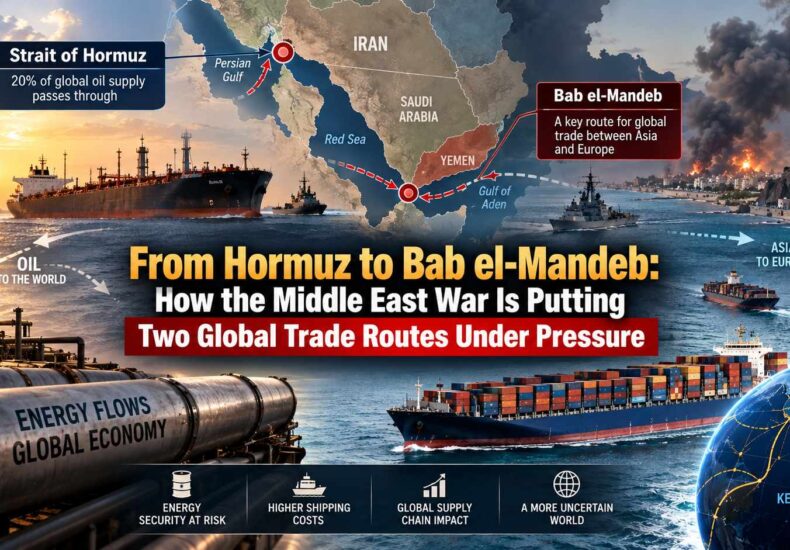
    A substantial share of globally traded crude oil and liquefied natural gas passes through this narrow maritime corridor connecting the Persian Gulf with international markets. Any disruption immediately raises concerns about supply shortages, higher transportation costs, and increased insurance premiums for commercial shipping.

    Because of its importance, even small diplomatic developments involving Hormuz can produce major movements in energy prices.

    The latest decline demonstrates how closely global markets monitor every signal emerging from the region.

    Diplomacy Can Move Prices Faster Than Tankers

    Oil shipments take days or weeks to reach customers.

    Market sentiment changes within minutes.

    Statements from U.S. Treasury Secretary Scott Bessent suggesting that negotiations could soon produce progress, together with reports from Qatar indicating meaningful diplomatic advances, immediately influenced trader expectations. The prospect of commercial vessels returning to normal operations reduced fears of an extended supply crisis, pushing futures prices lower.

    This illustrates how diplomacy has become an increasingly important driver of commodity markets.

    Lower Oil Prices Benefit More Than Energy Consumers

    Cheaper crude oil affects far more than fuel stations.

    Lower energy prices can reduce transportation costs, ease inflationary pressure, improve airline profitability, decrease manufacturing expenses, and support consumer spending.

    For countries that import large amounts of crude oil—including India, Japan, and many European economies—a sustained decline in oil prices can improve trade balances and reduce pressure on domestic inflation.

    Financial markets therefore viewed the diplomatic optimism as positive not only for energy companies but also for the broader global economy.

    The Market Is Still Pricing Risk

    Despite the sharp decline, oil prices remain elevated compared with levels seen before the recent Middle East tensions.

    Analysts note that traders continue to include a geopolitical risk premium because negotiations remain incomplete and shipping through Hormuz has not fully returned to normal. Any setback in talks could quickly reverse recent gains and push prices higher again.

    This means current prices reflect cautious optimism rather than complete confidence.

    One Agreement Will Not Solve Every Issue

    Even if commercial traffic resumes through the Strait of Hormuz, broader geopolitical challenges are likely to remain.

    Questions surrounding Iran’s nuclear program, regional security, sanctions, maritime governance, and future shipping arrangements continue to influence negotiations.

    The reported discussions are therefore viewed by many analysts as an important confidence-building step rather than a comprehensive settlement.

    Energy markets recognize this distinction, which explains why volatility remains unusually high.

    The Energy Industry Is Learning From Recent Disruptions

    The repeated uncertainty surrounding Hormuz has encouraged governments and energy companies to reduce dependence on a single maritime route.

    Pipeline expansion, strategic petroleum reserves, alternative export terminals, and diversified supply chains are increasingly becoming long-term priorities.

    Recent geopolitical shocks have reinforced the importance of resilience alongside production capacity.

    Future investment decisions are therefore likely to focus not only on producing more energy but also on delivering it through multiple secure routes.

    Investor Psychology Is Now a Strategic Factor

    Modern commodity markets respond almost instantly to headlines.

    A diplomatic breakthrough, an unexpected military incident, or even comments from senior officials can trigger large swings in prices within hours.

    This rapid reaction reflects the growing role of algorithmic trading, real-time information flows, and globally connected financial markets.

    As a result, managing expectations has become nearly as important as managing physical oil supplies.

    The Bigger Picture

    The latest fall in oil prices demonstrates that energy markets increasingly operate on expectations rather than immediate reality.

    Optimism surrounding a possible reopening of the Strait of Hormuz reduced fears of prolonged supply disruption and reminded investors that diplomacy can sometimes influence commodity prices more quickly than production itself.

    At the same time, the episode underscores how closely global prosperity remains tied to a narrow stretch of water connecting the Persian Gulf with international markets. Every diplomatic signal, shipping update, and geopolitical development in Hormuz now carries consequences that extend far beyond the Middle East, influencing inflation, trade, investment, and economic confidence across the world.

    Whether the current negotiations ultimately succeed or face new obstacles, one lesson is already clear: in today’s interconnected economy, the value of oil is determined not only by how much is produced, but also by how secure the world believes its supply will be.

  • Indian News Websites Suffer June Traffic Slump as the Global Battle for Readers Intensifies

    Indian news publishers faced a difficult June, with the country’s leading English-language news websites recording some of the sharpest traffic declines among the world’s most visited digital news platforms.

    According to an analysis of Similarweb data covering the 50 largest English-language news websites, the eight outlets experiencing the biggest month-on-month drops were all based in India. The result stands out because Indian publishers continue to occupy a significant place in the global digital-news market. However, their strong presence in the rankings did not protect them from a sudden decline in website visits.

    At first glance, the figures may appear to suggest that readers are losing interest in Indian journalism. The reality is likely more complicated.

    A Traffic Decline Does Not Necessarily Mean an Audience Disappeared

    Website visits are only one part of the modern news-consumption picture. Readers increasingly discover stories through mobile applications, YouTube, social-media feeds, messaging platforms, news aggregators and AI-generated summaries.

    This means that falling website traffic does not automatically prove that fewer people are consuming a publisher’s journalism. Some readers may simply be accessing the same reporting without visiting the outlet’s homepage or opening an article in a conventional web browser.

    For Indian publishers, this distinction is especially important. India is a mobile-first market where millions of users receive breaking news through notifications, short videos, WhatsApp messages and social-media posts. A publisher may therefore maintain considerable public reach while still recording fewer direct website visits.

    Nevertheless, the decline remains commercially important. Website traffic supports advertising impressions, subscriptions, registrations and first-party audience data. When readers consume headlines or summaries elsewhere, publishers may gain visibility without receiving the revenue-producing visit.

    Indian Publishers Dominated the Negative Side of the Ranking

    The concentration of Indian outlets among June’s biggest fallers makes the result more significant than an ordinary monthly fluctuation. One or two websites losing traffic could be explained by editorial performance, technical problems or a particularly strong previous month. Eight publishers from the same market declining together suggests that wider forces may be involved.

    Seasonal audience behaviour could be one explanation. Traffic can rise sharply during elections, major sporting events, national emergencies or other high-interest news cycles and then fall when those events pass.

    Changes in search-engine visibility may also have affected publishers simultaneously. Many large news organisations depend heavily on Google Search and Google Discover for article distribution. Even a relatively small change in recommendation systems, ranking signals or user behaviour can produce a noticeable decline across multiple websites.

    Competition within India’s English-language news market is another factor. Readers can choose from established newspapers, television-news brands, digital-native outlets, financial publications, international publishers, independent creators and increasingly sophisticated regional-language platforms. The available audience is large, but so is the number of organisations competing for attention.

    The Bigger Story Is the Weakening Link Between News and Publisher Websites

    The June results should also be viewed as part of a much broader challenge facing global journalism.

    For years, publishers used search engines and social platforms as pathways leading readers back to their websites. That system is now changing. Platforms increasingly try to answer users’ questions without requiring them to open the original article.

    Search results may display detailed summaries, key facts, videos and AI-generated responses directly on the results page. Social networks similarly encourage audiences to watch, read and discuss news without leaving their applications.

    For readers, this can be convenient. For publishers, it creates a serious problem: their reporting may power the online conversation while the corresponding traffic and advertising revenue remain with technology platforms.

    Indian news organisations are not alone in facing this pressure. Publishers in the United States, the United Kingdom and other major markets have also reported weakening referral traffic. What makes the June ranking notable is the unusually concentrated impact on Indian outlets.

    Global Rankings Can Hide Different Forms of Success

    Traffic tables are useful, but they should not be treated as complete judgments on journalistic influence or business strength.

    A website can attract hundreds of millions of low-engagement visits without building a loyal readership. Another publisher may have a smaller audience but stronger subscriptions, better engagement, a successful mobile application or a highly valuable specialist readership.

    Similarly, a monthly decline does not erase the international reach Indian publishers have built. The continued presence of numerous Indian brands among the world’s top English-language news websites demonstrates the scale of India’s digital media ecosystem.

    The more important question is whether these publishers can turn that reach into durable relationships with readers.

    Publishers Need Direct Connections, Not Just Platform Traffic

    The latest figures offer an important lesson for news organisations: depending heavily on search engines and social platforms is becoming increasingly risky.

    Publishers may need to invest more aggressively in channels they can control, including newsletters, mobile applications, memberships, subscriptions, browser notifications and registered-user communities. These products can create direct relationships that are less vulnerable to sudden algorithm changes.

    They must also give readers a reason to visit the original source. Breaking-news headlines are now available almost everywhere. Exclusive reporting, regional expertise, investigative journalism, useful explainers, trusted analysis and distinctive voices are much harder for competitors or automated summaries to replace.

    Improving the reading experience will matter as well. Slow pages, intrusive advertisements, misleading headlines and complicated navigation can push audiences toward platforms offering faster and simpler alternatives.

    A Warning Sign, Not a Final Verdict

    June’s decline should not be interpreted as proof that Indian digital journalism is collapsing. Monthly traffic can be influenced by news cycles, search changes, seasonality and differences in how audiences access content.

    However, the pattern should still concern publishers. When several major outlets from one country experience the largest declines at the same time, it signals that familiar audience-growth strategies may no longer be dependable.

    The real story is therefore bigger than a disappointing month for Indian news websites. It is about a global digital-news economy in which journalism remains highly valuable, but the traditional website visit is becoming harder to secure.

    Indian publishers still command enormous reach and influence. Their next challenge is to ensure that audiences do not merely encounter their content through algorithms, summaries and social feeds, but actively choose to return to the publishers themselves.

  • Hello world!

    Welcome to WordPress. This is your first post. Edit or delete it, then start writing!